Expert Mykhailo Pyrtko explains How an $8.5 billion international pledge became one of the most watched experiments in global climate finance
1. Introduction: A Historic Pledge
In November 2021, on the sidelines of the COP26 climate summit in Glasgow, something genuinely unprecedented took place. The United States, United Kingdom, European Union, France and Germany jointly announced an $8.5 billion commitment to help South Africa accelerate its transition away from coal. The package – formally known as the Just Energy Transition Partnership, or JETP – was the first of its kind directed at an emerging economy, and it sent a clear signal to the developing world: the wealthiest nations were prepared to put serious money behind their climate rhetoric.
South Africa was not chosen arbitrarily. It is the most carbon-intensive economy on the African continent, responsible for roughly 1% of global greenhouse gas emissions despite representing a fraction of world GDP. Its electricity sector is dominated by coal to a degree almost without parallel among major economies. And its struggles with energy poverty, unemployment and industrial decline make it a microcosm of the dilemmas facing dozens of developing nations being asked to abandon fossil fuels on accelerated timelines. If the Just Energy Transition could be made to work in South Africa, the argument went, it could serve as a replicable model for the world.
Four years on, the picture is considerably more complicated than the optimism of Glasgow suggested.
2. The Coal Problem: Why This Transition Is So Hard
To understand the scale of what is being attempted, it is necessary to understand just how deeply coal is embedded in South Africa’s energy system. Approximately 80% of the country’s electricity is generated by coal-fired power stations, the vast majority of which are operated by Eskom, the state-owned utility. This dependence is not a recent development – it was built over a century, shaped by the country’s abundant coal reserves, by apartheid-era industrial policy, and by decades of underinvestment in alternatives.
Eskom itself is in a state of profound institutional crisis. Its fleet of coal-fired stations, many of them decades old and poorly maintained, has been the primary cause of loadshedding – the rolling blackouts that have become a defining feature of South African life since the late 2000s. At its worst, in 2022 and 2023, South Africa experienced Stage 6 loadshedding, meaning up to twelve hours of power cuts per day. The economic cost has been devastating, with the Reserve Bank estimating annual GDP losses running into hundreds of billions of rand.
The paradox at the heart of the transition is acute. The coal stations causing the crisis cannot simply be decommissioned – they remain the backbone of a grid that has no immediate replacement ready. Shutting them down too quickly would deepen the very energy crisis that is already strangling the economy. Moving too slowly, on the other hand, perpetuates carbon emissions and delays the investment in renewables that the country desperately needs. Threading this needle is the central challenge facing South African energy policymakers.
Compounding the difficulty is Eskom’s financial position. The utility carries a debt burden of approximately 400 billion rand, accumulated over years of mismanagement, state capture and inflated contracts. Servicing that debt consumes resources that should be directed toward maintenance and new generation capacity. Without resolving the debt question, no credible energy transition is possible – which is precisely why debt relief became a central element of the JETP package.
3. Where Is the Money Actually Going?
The $8.5 billion headline figure requires careful unpacking, because the composition of the package matters enormously. Of the total, a relatively modest proportion takes the form of grants – money that does not need to be repaid. The bulk is structured as concessional loans, meaning loans offered at below-market interest rates, and as guarantees designed to attract additional private investment. For a country already struggling under a heavy debt load, the distinction between grants and loans is not semantic – it is the difference between genuine relief and an additional financial burden dressed in climate language.
The JETP Investment Plan, published in late 2022, set out how the funds were intended to be deployed across five priority areas: electricity generation, electricity transmission and distribution, green hydrogen, electric vehicles, and skills development. Of these, the electricity sector – both the retirement of old coal capacity and the procurement of new renewable generation – commands the largest share of attention.
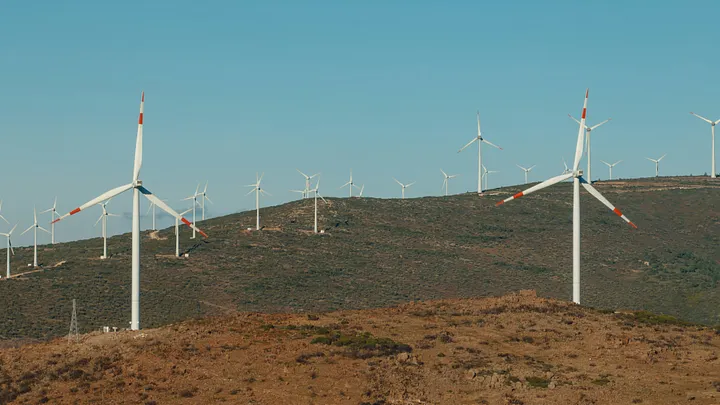
On the renewable procurement side, South Africa has made genuine progress. The Renewable Energy Independent Power Producer Procurement Programme, known as REIPPPP, has over successive rounds brought significant wind and solar capacity online, with independent power producers now contributing meaningfully to the grid. Several large-scale projects in the Northern Cape, one of the world’s most solar-irradiant regions, have demonstrated that South Africa can attract private capital for clean energy when the regulatory environment permits it.
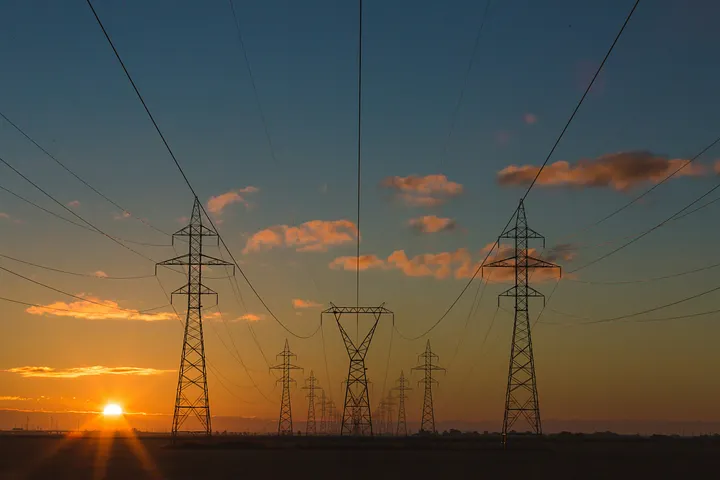
Grid infrastructure, however, remains a critical bottleneck. Renewable energy projects, particularly in the Northern Cape and Western Cape, are increasingly constrained by the capacity of transmission lines to carry power to where it is consumed. Eskom’s transmission grid requires substantial investment and expansion – investment that the JETP funds are intended to partially catalyse, but which faces procurement delays, regulatory complexity and institutional capacity constraints within Eskom itself.
Perhaps the most closely watched element of the package is the provision for Eskom debt relief. The South African government has committed to absorbing a substantial portion of Eskom’s debt onto the sovereign balance sheet, a process that has begun but remains politically contentious. The theory is straightforward: relieving Eskom of its debt burden frees up cash flow for maintenance and investment, while creating the conditions under which the utility can be restructured and eventually unbundled into separate generation, transmission and distribution entities. The practice has proven considerably more complex.
A broader concern raised by analysts and civil society organisations is the pace of actual disbursement. Pledged money and deployed money are very different things, and the history of international climate finance is littered with commitments that moved slowly from announcement to project. As of the mid-2020s, a significant portion of the JETP funds remain at the stage of planning and negotiation rather than active deployment on the ground.
4. Progress So Far: What Has Actually Changed?
Any honest assessment of South Africa’s Just Energy Transition must acknowledge both real progress and significant shortfalls relative to the ambition of Glasgow.
On the positive side, the end of loadshedding as a daily reality – achieved through a combination of improved Eskom plant performance, the addition of renewable capacity, and an explosion of rooftop solar installation by households and businesses – represents a genuine improvement in the energy situation. South Africa’s private solar market has grown at a remarkable pace, driven by consumers and businesses who simply could not afford to wait for a state solution. This organic, market-driven response has added gigawatts of distributed generation to the system in a relatively short period, demonstrating that South Africa’s renewable resource base is world-class.
The policy framework has also evolved. Reforms to the licensing regime, which previously required cumbersome approval processes for private generation projects above a certain threshold, have opened the market to a far wider range of independent producers. Municipalities are gradually, if unevenly, being permitted to procure their own power rather than remaining entirely dependent on Eskom.
Against this, the decommissioning of coal capacity has proceeded more slowly than originally envisaged. Several ageing Eskom stations that were scheduled for closure have had their operational lives extended, partly because the replacement capacity is not yet available and partly because the political and labour dynamics around closures are complex. The target of retiring 35 gigawatts of coal capacity by 2050 remains official policy, but the interim milestones are under pressure.
The green hydrogen ambition, which captured considerable international interest at Glasgow, has advanced slowly. South Africa has the renewable energy potential and the platinum group metal reserves to be a significant player in global hydrogen supply chains, but translating that potential into operational projects requires regulatory clarity, infrastructure investment and offtake agreements that are still being negotiated.
5. Conclusion: A Test Case for the World
South Africa’s Just Energy Transition is, at its core, an experiment in whether international climate finance can actually work at scale for a developing economy. The ambition is genuine. The resource base is favourable. The policy direction, however imperfectly executed, is broadly correct. And the international community has made a financial commitment that, while imperfect in its structure, is real.
What the South African experience has already demonstrated is that the obstacles to transition are as much institutional and political as they are technical or financial. Money alone does not build transmission lines, retrain workers, resolve utility debt crises or overcome the inertia of a century-old coal economy. It requires state capacity, political will, regulatory reform and genuine partnership between governments, development finance institutions and the private sector – all simultaneously.
The world is watching closely, and not merely as a matter of academic interest. Nations across Africa, Asia and Latin America are drawing lessons from South Africa’s experience as they negotiate their own terms of engagement with the global energy transition. If South Africa can demonstrate that an $8.5 billion partnership delivers measurable decarbonisation without sacrificing development, it will have made one of the most important contributions to global climate diplomacy of the decade. If it stalls, it will reinforce the scepticism of developing nations who suspect that climate finance, however generously announced, rarely arrives on the terms that matter.
The road from coal is long. South Africa is on it – but the pace, and the destination, remain genuinely uncertain.